












How Much Energy Will a 15kW Solar System Produce?
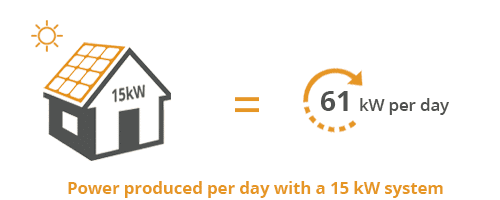
An efficient, good quality 15kW produces an average of 65kWh per day. However, the actual power output varies depending on the following variables:
- Operating temperature of the solar panels
- Geographical location
- Climate
- The performance of the panels and inverter
- Partial shading
- Orientation and tilt angle of the solar panel system
Below are indicative figures of kilowatt-hours of electricity a 15kW north-facing solar system generates per day in Australia’s capital cities.
15kW Solar System Output by City
| Capital City | Approximate Average Daily Energy Yield |
|---|---|
| Adelaide | 54 - 61kWh |
| Brisbane | 58 - 61kWh |
| Darwin | 61 - 67kWh |
| Canberra | 54 - 62kWh |
| Melbourne | 47 - 54kWh |
| Perth | 60 - 65kWh |
| Hobart | 43 - 49kWh |
| Sydney | 51 - 56kWh |
15kW Solar System Cost
The cost of a 15kW system ranges from $12,200 to $15,900, depending on the city you live in, with the biggest factor being the quality of equipment you go for.
| City | Average cost (GST and incentives included) | Average cost per watt (installed) |
|---|---|---|
| Adelaide | $13,339 | $0.89 |
| Brisbane | $13,150 | $0.87 |
| Canberra | $13,900 | $0.92 |
| Hobart | $15,350 | $1.02 |
| Melbourne | $14,800 | $0.99 |
| Sydney | $13,250 | $0.88 |
| Perth | $13,339 | $0.89 |
| Average | $13,875 | $0.93 |
How Many Solar Panels Does a 15kW Solar System Have?
A 15kW system consists of about 45 to 60 solar panels. The actual number will depend on the size of solar panels you choose. If you choose panels with higher power output, you will have fewer panels on your roof. Common panel sizes that can make up a 15kW solar system include:
- 300W (50 x solar panels to produce 15,000 Watts)
- 330W (46 x solar panels to produce, 15,000 Watts)
- 370W (41 x solar panels to produce, 15,000 Watts)
- 400w (38 x solar panels to produce, 15,000 Watts)
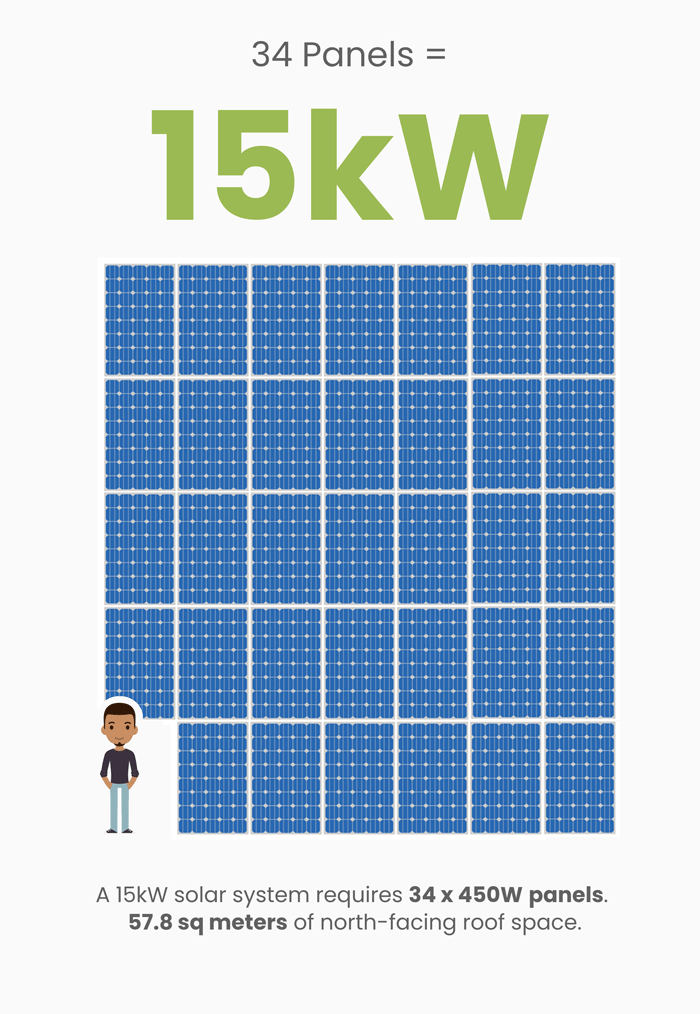
- 450w (34 x solar panels to produce, 15,000 Watts)
How Much Space Is Required for a 15kW Solar Power System?
Most solar panels measure between 1.7m x 1m in size, which means you will need about 57m2 of roof space to accommodate the 34 panels for your 15kW system. Since most panels’ power output is between 450W each, the roof space required will depend on the wattage of your panels.
15kW systems are large and require lots of space. So, unless the system is mounted to the ground, it may not be an option for most Australian households.
What’s the Average Payback Period for a 15kW Solar System?
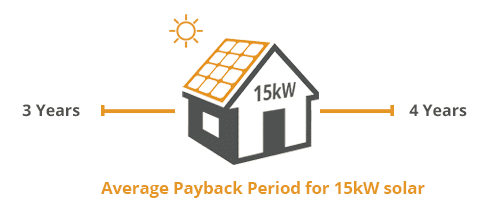
The payback period for a high-quality, efficient, and reliable 15kW solar system averages between 3 to 5 years. However, the real savings start upon installing your system once it starts generating power.
How Much Will a 15kW Solar Energy System Save Me?
Typically, the savings you can get from your 15kW solar system depend on the amount of solar power you use in your home or business when it is being generated.
These days, you may not benefit much from solar feed-in tariff credits because the rates tend to be lower than what you pay for electricity from the grid.
So, your solar energy will benefit you if you use as much energy as possible – the more power you use, the more you will save.
The surplus energy will be sent to the grid from which you will earn credits to help reduce your overall electricity bills.
Depending on how much money you pay for your electricity, you can save between 22 cents to 30 cents. Also, depending on your solar provider, you will be paid between 5 cents to 13 cents per kWh for the surplus power sent to the grid.
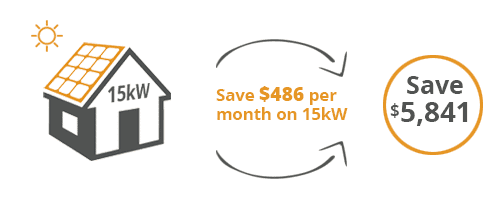
This translates to about $1,100 to $1,500 per quarterly bill.
What Kind of Business/Household Does a 15kW Solar System Suit Best?
The 15kW solar power system is best suited for large households or small businesses. If your daily power consumption averages at 40kWh to 60kWh during sunshine hours, have large appliances, home automation, a large pool, and your electricity budget is about $1,000, then a 15kW system should be enough to meet your daily energy needs.
15kW Solar Panel System With Battery Storage
Since a 15kW solar power system generates an average of 60kWh of energy per day, you will need battery storage with a capacity of 42kWh.
If you decide to go with the Tesla Powerwall 2 batteries storing 14kWh each, you will need three of these batteries to generate the required capacity. These batteries allow you to use the sun’s power during the day and night.
However, you should remember that battery storage options are pretty expensive and can increase your payback period. Consequently, before you invest in them, seek guidance from a professional solar installer.
Are You Ready To Switch to Solar Power?
Switching to solar power is the best decision you will ever make. With solar energy, you can reduce your monthly electricity bills and help save the planet at the same time.
Once you set your mind on the 15kW system, the next step is to look for a reliable solar installer. You do not have to spend hours on the internet looking for a provider as we can help you with that.
Use This FREE Service
Gosolarquotes.com is a free service that quickly matches you with top-voted local solar installers.
You can get 3 estimates fast by real certified experts in your area in just 2 minutes.
- Scroll to the top of the page and enter your Zip Code
- Answer questions about your solar needs
- Your details are forwarded to three local professionals. They will send you a price estimate for the installation and some friendly advice.
IMPORTANT: There is no obligation to hire. This is a free tool and service to be used at your pleasure.
FAQ's
The 15kW solar power system is a huge generation unit suited for businesses or large households with enough roof space and consistently high energy consumption patterns.
This system is paired with 45 to 60 solar panels and a 10kW/15kW CEC-approved inverter. You will also need an electrical kit and roof mounting that have been approved for use in Australia.
If you use between 40kWh to 60kWh of power every day, the 15kW solar system could be right for you.
Yes! Depending on how much money you pay for your electricity, you can save between 22 cents to 30 cents per kWh. So, depending on your solar provider, you can be paid about 5 cents to 13 cents per kWh for the power sent back to the grid.
A 15kW solar system can help you save between $1,200 and $1,600 per quarterly bill.
To determine the best solar panels currently on the market, factors such as efficiency, warranty, durability, price, performance, and temperature coefficient must be considered. Below are some of the best solar panels on the market.
- LG: Best Overall
- Panasonic: Best Temperature Coefficient
- SunPower: Most Efficient
- Silfab: Best Warranty
- Trina Solar: Best Value
- Q Cells: Consumer Favourite
- Canadian Solar: Most Affordable
- Mission Solar: Best Small Manufacturer
- Windy Nation: Best for Backup Power
- REC Solar: Most Reliable
Home solar batteries last between 5-15 years, while most solar panels last for 25 to 30 years. If you plan to install solar batteries, you will need to replace them after some time to match the lifespan of your solar panel system. If the batteries develop issues before their lifetime ends, you can contact the tech or support team for help.
