
Solar rebates and incentives reduce the upfront cost of installing panels and batteries, and this category brings all federal and state programs together in one place so homeowners can see what they’re eligible for and how much they can realistically save.
Rebate rules change often, and each state plays by its own set of conditions. The aim of this hub is to give you a clear, current snapshot of what’s available, how the incentives work and what you need to know before applying. If you’ve ever tried to compare an STC discount with a state rebate and felt like the maths didn’t add up, you’ll find the explanations here much easier to follow.
Most rebates follow a predictable structure. The federal system uses Small-scale Technology Certificates (STCs), which reduce the cost of new solar installations based on how much your system is expected to generate over its lifetime. You don’t apply for them directly — the value is built into your quote and varies depending on your postcode, system size and the certificate trading price at the time.
State incentives work differently. Some states offer rebates or loans for installing solar, adding a battery or joining a virtual power plant. Others focus on low-income support or regional access. The point of this hub is to break those programs down cleanly so you can see which schemes overlap and which ones can’t be claimed together.
These attributes shape the real value of any solar system. A system that looks expensive at first can become far more affordable once the correct incentives are applied.
Most homeowners misunderstand rebates not because they’re complicated but because installers explain them differently. Some quote STCs as a discount, others roll them into the total price, and a few present them in ways that look more generous than they actually are. This hub cuts through that by explaining how incentives interact with system cost, payback periods and long-term performance.
Understanding rebates properly helps you compare quotes on equal footing. It also prevents you from missing out on programs that close once funding is exhausted — something that happens more often than people expect.
The Australian Government has introduced the Solar for Business Program to help reduce the upfront cost of installing solar for eligible businesses. Under this program, businesses can receive a rebate for approved small-scale solar PV systems of up to 30 kW. The rebate can cover up to 50% of the system cost, capped at a …

What is the solar rebate in ACT? The ACT solar rebate is delivered through the Sustainable Household Scheme, which provides interest-free loans of up to $15,000 for solar panels, batteries, and energy-efficient upgrades. Households can install solar or battery systems with no upfront cost and repay the loan over time, reducing immediate financial barriers while …
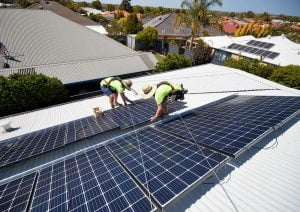
Western Aussies meeting the eligibility requirements can take advantage of discounts on solar panels. The size of the discount you’re entitled to is determined by the system size you decide to install. The average solar rebate in WA is $1,955, which you would be entitled to if you installed a 6kWh solar panel system (The …

Much like other parts of Australia, Tasmania is steadily increasing its renewable energy generation. High electricity prices and falling system costs continue to drive demand for rooftop solar, and government incentives help soften the upfront expense for households and businesses. The average solar rebate in Tasmania is about $1,157 for a 5kW solar panel system. …
Continue reading “Solar Rebate TAS: Federal STCs, Battery Incentives & Payback Guide”
From 1 July 2025, NSW homeowners and small businesses can reduce battery costs through a new state incentive under the Peak Demand Reduction Scheme (PDRS) and the Federal Cheaper Home Batteries Program. Together these schemes make installing a solar battery in NSW more affordable than ever while supporting the state’s renewable energy targets. 💡New to …
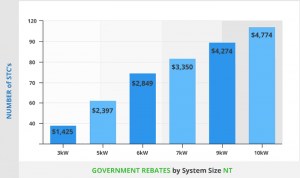
How much is the solar rebate in the Northern Territory? Solar rebates in the Northern Territory are delivered through the Small-scale Technology Certificate (STC) scheme, which reduces the upfront cost of installing solar panels. In NT, typical rebates range from around $1,500 for a 5kW system to over $3,200 for a 10kW system, depending on …
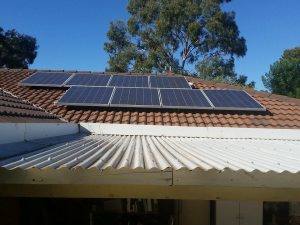
When you’re leasing or shifting into a spot equipped with solar panels, figuring out the feed-in tariffs is essentially the last piece of the puzzle to understand, once you’ve sorted the details regarding solar rebates and finalised the lease agreement. Feed-in tariffs are essential to the whole thing coming together. It all depends on who …
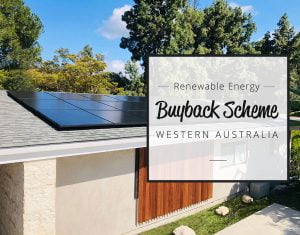
Solar panel owners in WA are benefiting from the perks offered by the Renewable Energy Buyback Scheme (REBS). The renewable energy buyback scheme applies to WA solar panel owners who do not receive a feed-in tariff. It pays 7.1350 cents per kWh of solar power exported to the grid. The REBS does not consider the …
Continue reading “Renewable Energy Buyback Scheme WA: Rates & Eligibility”
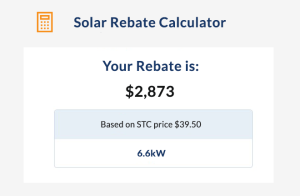
STC Solar Rebate Calculator 2025 Edition How it works To calculate the STC solar rebate you are entitled to, enter the size solar system you would like to install, your postcode, and the year you intend to install the system. Solar Rebate Calculator How is the STC rebate calculated? The STC rebate is calculated with …
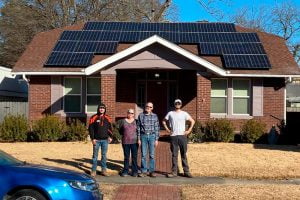
The discount you receive on a 5KW solar system depends on where you’re located. Down Under, every state has its own method for working out the rebate you can get. Therefore, depending on which state you call home, you might be able to score a 5KW solar system at a more affordable price than in …
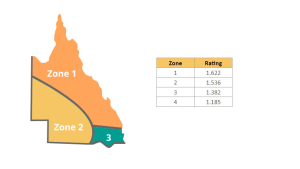
Queensland covers STC zones 1, 2, and 3, with the precise zone you fall into depending on your home’s location in the state. Most of the Queensland land mass is in Zone 1, but most of the population lives in Zone 3, which covers Brisbane, the Gold Coast and the Sunshine Coast. There are some …

Absolutely, you’re qualified to apply for solar rebates in Queensland not just once, but twice. The eligibility for these rebates is determined by the property’s location, not who is applying. Essentially, if you own several properties, you’re allowed to claim the solar system rebate for each and every house you own. What if I want …
Continue reading “Can I Claim The Solar Rebate Twice in QLD?”
